
Opinion · Homes
More homes can ease rents. Vancouver still needs to protect renters.
Vancouver’s asking rents eased and vacancy rose. That is a reason to keep building, alongside stronger renter protections and more public and co-op housing.
Share this article
Vancouver’s rental market has given people looking for a home a little more room. The region’s two-bedroom asking-rent index fell 10.2% between early 2024 and late 2025, in CMHC’s figures.
That is a change worth taking seriously in a city where finding a rental has been such a strain. It is also a reason to keep building.
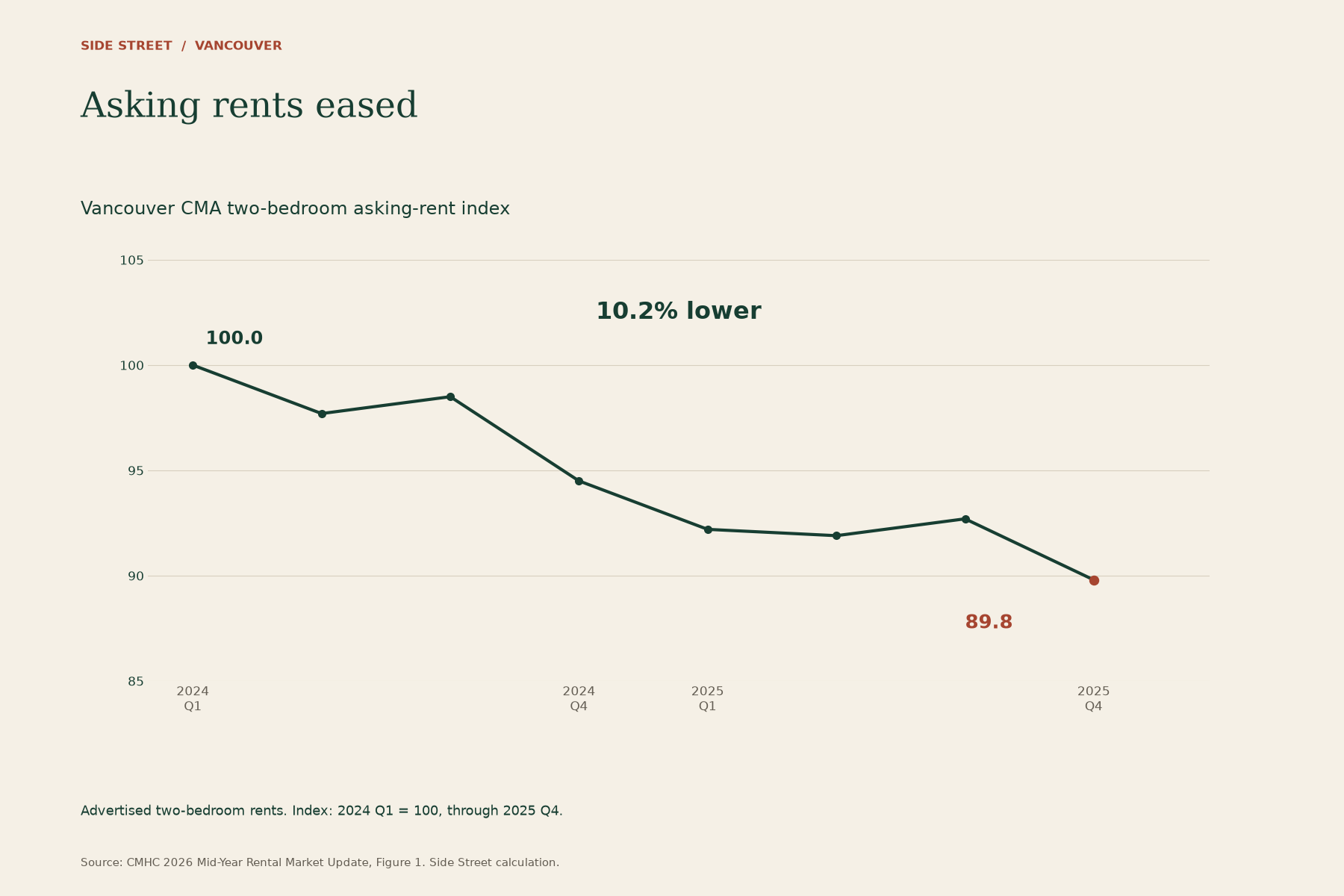
CMHC reports more competition from newly completed rentals and investor-owned condos in Vancouver. Its mid-year update also makes clear that average rents paid across tenancies continued to rise. Relief for someone shopping for a home and the experience of someone already renting can move differently.
Vacancy gives renters some room to choose
The region’s purpose-built apartment vacancy rate rose from 1.6% in 2024 to 3.7% in 2025. That gives people looking for a home more room to choose.
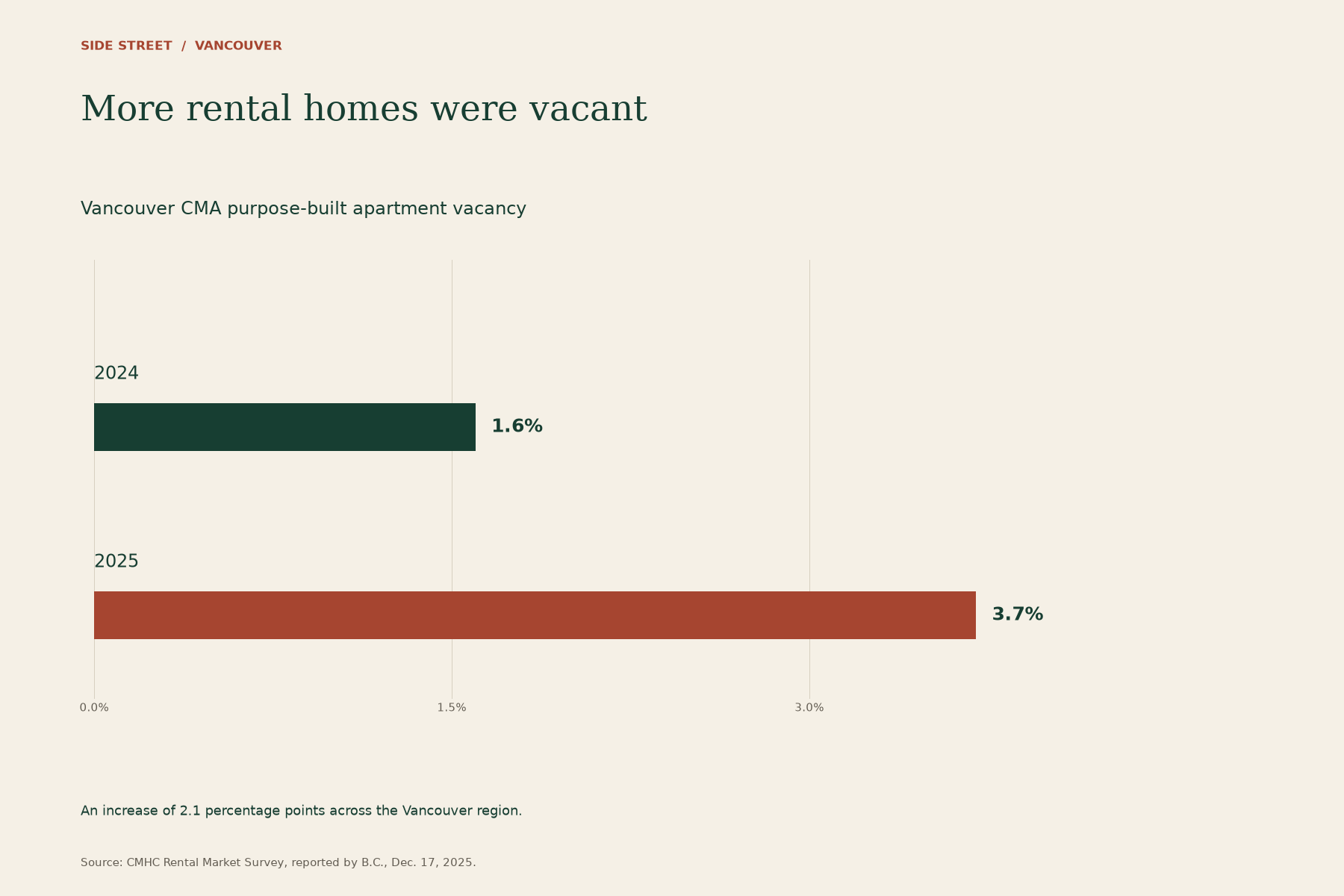
New homes arrived as population growth and the labour market softened. Both supply and demand helped loosen the squeeze.
We want renters to have more choice and landlords to have to compete for them. More available homes help make that possible. Easing rents should give Vancouver a reason to keep adding homes, rather than an excuse to decide we have done enough.
New homes make room beyond the new building
A new apartment can be expensive and still matter to people who will never rent it. When someone moves into it, they may leave another home available. That move can set off another, and another.
Research tracking those moves found the chains reaching lower-income neighbourhoods. The people moving into a new building are part of the same housing market as everyone else. Their old homes matter too.
Auckland offers evidence about changing the rules across a city. In 2016 it allowed more housing on roughly three-quarters of its residential land. A 2026 study estimates that, eight years later, rents were 23% lower than they would have been without the reform.
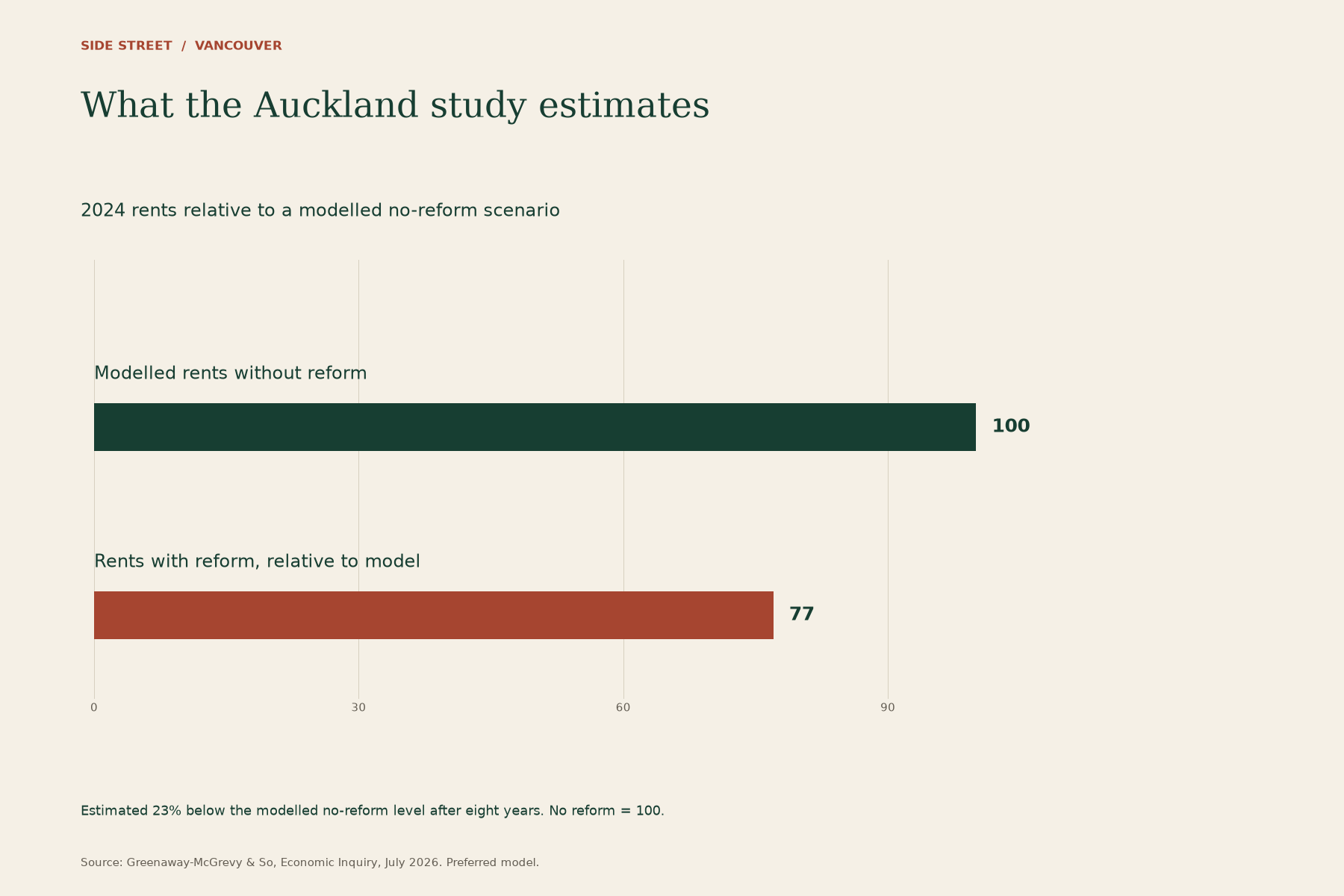
That is a strong reason to take broad permission to build seriously. We would rather Vancouver learn from a city that made room across much of its residential land than keep arguing over whether each small apartment building belongs.
Permission needs to lead to homes
Permission alone will not get an apartment built. In Chicago, targeted zoning changes near transit raised property values without a detected rise in permitted homes over five years. Financing and building costs still matter.
Vancouver should judge its reforms by the homes that reach completion and what they rent for. That means paying attention to the cost and difficulty of getting a building from an allowed use to a front door someone can open.
The renter who has to leave still needs help
A broader improvement in rents does not pay someone’s moving costs or let them stay near their school, work or neighbours during redevelopment.
Vancouver’s relocation policy includes stronger provisions for eligible tenants in specified plan areas. Those include a right to return at the lower of their current rent or 20% below the city-wide average market rent, alongside a temporary rent top-up. Eligibility and the applicable policy need checking for each building.
We would like strong, usable protections to reach more tenants. We also want public and co-op housing, and the preservation of older rentals where that keeps homes affordable. People with very low incomes need help that does not depend on waiting for a market-wide effect.
Those priorities belong alongside more room to build. Let more neighbourhoods accommodate apartments and shops, help projects reach completion, and hold the City to what happens to the people already living there.
Vancouver election guide · Try the Vancouver election compass · Standards and corrections
